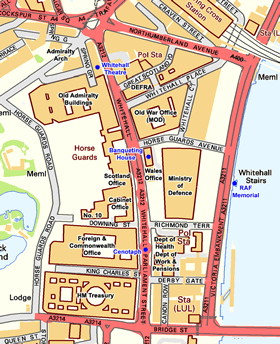
 This website and its accompanying publications provide a thorough introduction to the duties, responsibilities and working practices of Whitehall officials. They also contain detailed information about civil service numbers, pay, pensions etc. as well as a detailed history of civil service reform and a great deal of advice for new recruits. Other sections focus on specific subjects such as Women Civil Servants, Special Advisers, Private Secretaries and Ministerial Directions.
The most popular pages are listed below together with summaries of the main sections of this site.
There is also a comprehensive online library and you might find this search facility useful:-
POPULAR PAGES

What is a civil servant?
The UK Civil Service is much more narrowly defined than in most other countries. Only 1.6% of all employees (9% of public sector employees) are civil servants. So who are they? Follow this link to learn more.
Other pages will help you understand the various grades and roles and their equivalents in the armed forces.

How many are there?
Too many! - according to most ministers. There has certainly been a large increase in numbers since the Brexit referendum. Follow this link to see the detail.
Can they be sacked?
Yes! More detail is here.

What are they paid?
A lot less than before, in real terms at least. Here's the detail.

Other Popular Pages
Special Advisers (see below) and civil servants have often written amusing and perceptive articles about real-world policy-making. I particularly recommend Giles Wilkes' Policy-Making 101, Iain Mansfield's Seven Public Policy Rules of Thumb, and this introduction to 'Mandarin'.
FACTS & STATS
This part of the website provides essential factual information about the UK Civil Service accessed through the links below.
Whilst reading these web pages, please bear in mind that the UK Civil Service is much more narrowly defined than in most other countries. Only 1.6% of all employees (9% of public sector employees) are civil servants.
Definitions & Statistics
Ministers, Private Offices, Special Advisers & Directions
If you do not immediately find the information you need in the above web pages, you may well find this House of Commons Library Research Briefing will answer your detailed questions. It in particular goes into more detail about topics such as the differences between the Home Civil Service, the Northern Ireland Civil Service and the Diplomatic Service.
Researching your ancestors? Follow this link to read National Archives' guide to finding records of individual civil or Crown servants. And follow this link to access the Civil Service Commission Appointments, Promotions and Transfers 1871-1942 database
CIVIL SERVICE SKILLS
This part of the website summarises the key skills needed by every Whitehall official, including how to work effectively with Ministers, how to prepare submissions and briefings, and an introduction to Parliamentary business. It also contains some essential advice on project and change management.


Follow this link to read the advice or check out the following inexpensive or free publications.
'How to be a Civil Servant: Westminster Explained' is a popular and inexpensive book written specially for new recruits and for those who want to understand the Whitehall/Westminster machine. More information is here.
How to Succeed in the Senior Civil Service is free guidance for younger civil servants moving into more responsible positions for the first time - and for those entering the Senior Civil Service from outside central government. It is an anthology of what I was told (or what I wish I had been told) (and what I learned from my mistakes) as my civil service career developed. It contains advice from a wide range of very experienced officials, academics and others - although some of the advice is so frank that it could never be included in formal training material. Its contents are here.

Societies fail if their governments are ineffective, and governments are ineffective if their civil servants are ineffective.
The modern civil service is undoubtedly much more efficient than its predecessors, but the quality of policy making and support for ministers is generally reckoned to be patchy. There has been no serious review of the fundamental relationship between Parliament, Ministers and civil servants for over 100 years. These web pages explore these issues in great depth.
History etc.
Women in the Civil Service
History, Humour, Quotations etc.

Interested in Current Civil Service Issues?
You might like to subscribe to my (free) Substack newsletter. The screenshot, below, gives you a feel for the sort of thing you might read.
I also post on Bluesky.
The latest Civil Service Reform and related news is here.

UNDERSTANDING REGULATION

Regulation protects the weak and vulnerable. But it costs time and money and it makes illegal that which would otherwise be legal. Regulation is therefore always controversial, and it can be very complex. Is the burden now too great? Is 'the regulatory state' now too powerful? Are we over-protecting our children? And how do we avoid further regulatory failures such as the financial crisis, Stafford Hospital, Grenfell Tower.
An interesting and thought-provoking introduction to regulation may be found here.
And much more detail can be found in the Understanding Regulation web site.
UNDERSTANDING LOCAL GOVERNMENT
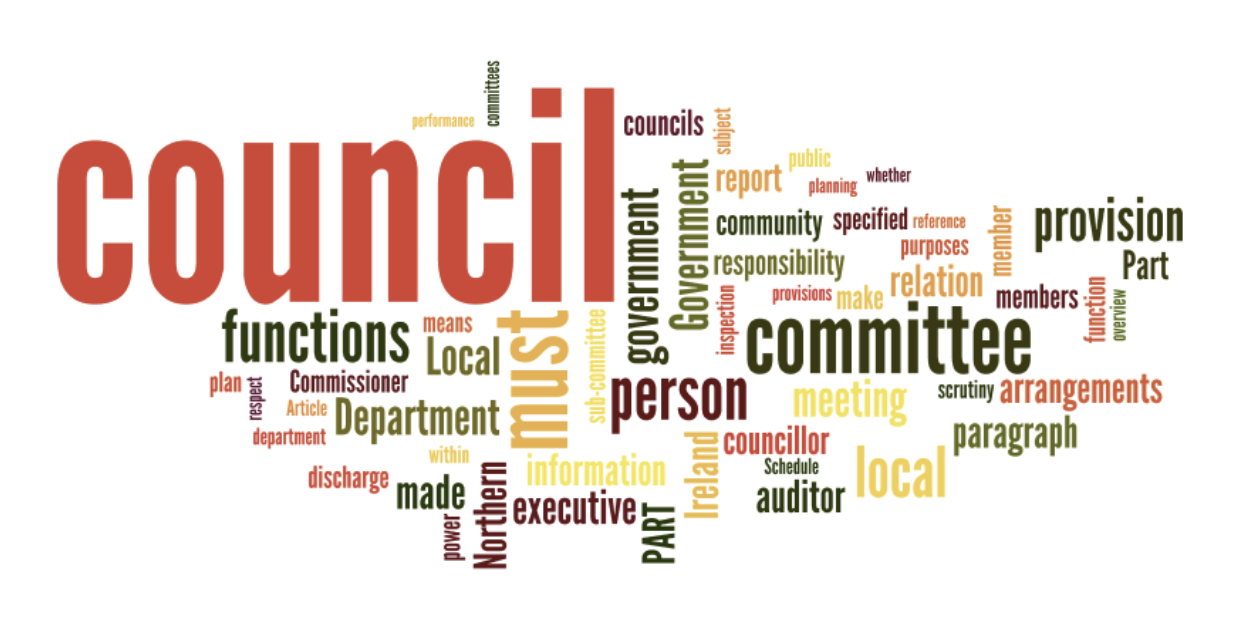
This separate web site will help you understand the complex structure of local government in the UK, the relationship between officials and elected representatives, and various current issues.
Further information About this website, and Contact information, is here.
There is an extensive on-line reference library here. The same page also lists books written by civil servants describing their work.
If you need more detail then I strongly recommend that you investigate the data and reports published by the Institute for Government, including detailed statistics in its Whitehall Monitor series.
This link will enable you to subscribe to my occasional Substack newsletters. A link to my Bluesky feed is in the footer below.
Follow @ukcivilservant.bsky.social on Bluesky
Spotted something wrong?
Please email me at ukcs68[at]gmail.com if you spot anything that is out-of-date, or any other errors, typos or faulty links.