The Westminster Model:- Impartiality, Accountability & all that
Civil servants operate within a complex constitutional framework. They are expected to be loyal to their current Ministers but must remain politically impartial and ready to switch allegiance when there is a change of government. They must also respect the role of Parliament and operate within numerous ethical constraints.
They also work within a wide range of ethical and other constraints which are taken very seriously by both senior staff and the wider public. This includes an ethical code which requires officials to be honest, impartial, challenging and collaborative. One of their key skills, therefore, is to achieve their objectives whilst observing both the letter and the spirit of their various obligations.
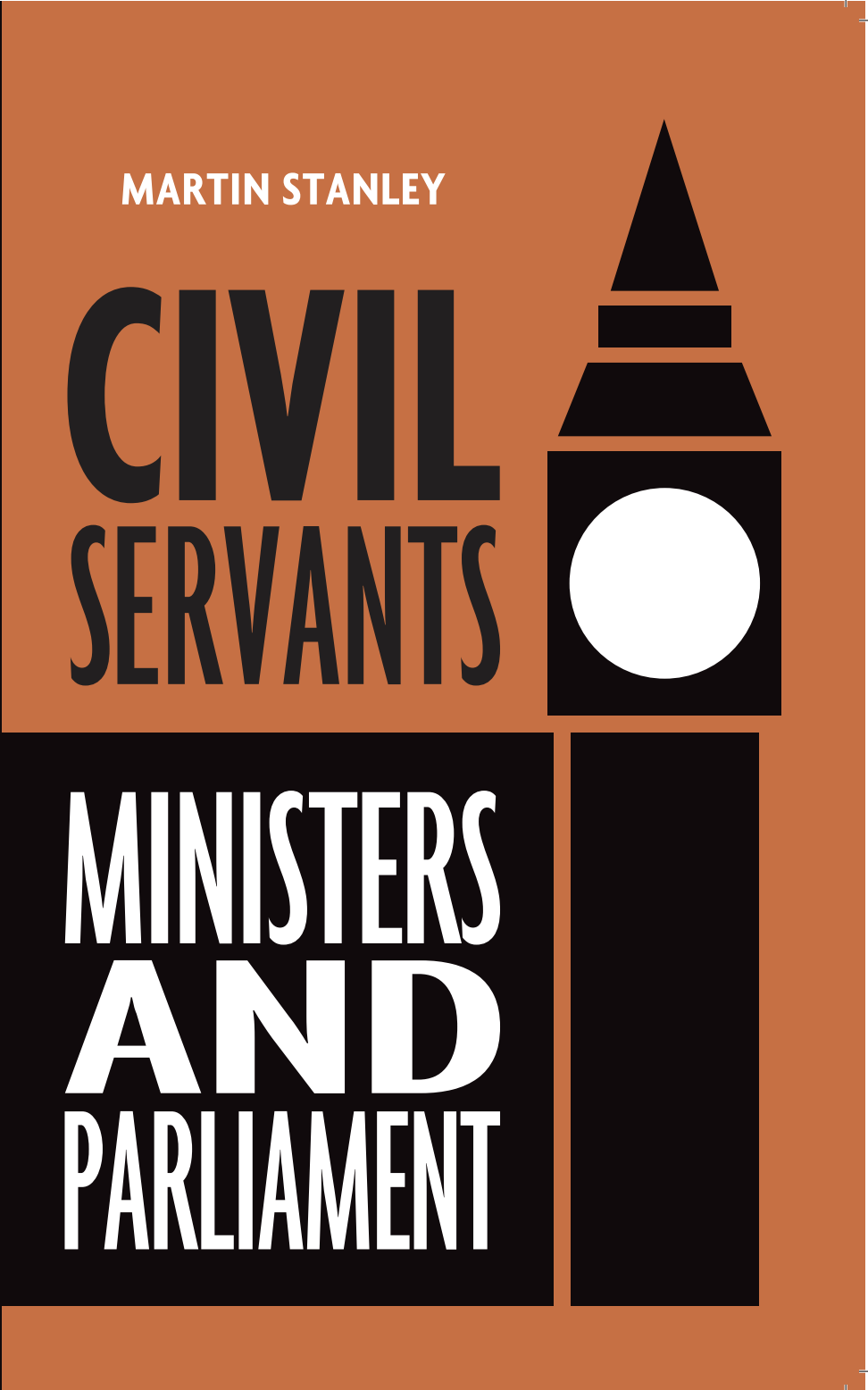 The following text - Civil Servants, Ministers and Parliament - contains a comprehensive description and discussion of the Westminster Model which governs the relationship between civil servants, ministers and Parliament. It provide an insightful and accessible description of civil servants’ duties, supplemented by comment and practical advice from experienced officials. This includes, for instance, guidance on how to maintain political impartiality, and what civil servants should do (if anything) if ministers do not take their advice, or if ministers appear to be 'behaving badly'.
It also includes criticisms of the current framework and describes how civil servants may, as a result, be becoming increasingly accountable to Parliament.
- How do civil servants maintain political impartiality whilst working closely with ministers?
- What should civil servants should do (if anything) if ministers do not take their advice, or if ministers appear to be 'behaving badly'?
- To what extent are Government blunders the fault of the civil service?
- Why aren't MPs better at holding civil servants to account?
Readers and reviewers have commented:
- If you want a readable, comprehensive summary of the constitutional framework within which UK civil servants and politicians operate, there is no better primer than 'Civil Servants, Ministers and Parliament'. At under 170 pages, we're swiftly taken through rules, ethics and what happens when things go wrong. For an introduction to UK public governance, it a great place to start.
- "An excellent new publication. An authoritative insider's guide to the role of civil servants and their relationship with ministers and Parliament. ".
You can now download every chapter, for free.
Free PDFs
Chapter 1. Background, History & Further Reading
- Introduction
- The UK Constitution & the Civil Service
- Burke, Green & Civil Service Ethics
- The Northcote Trevelyan Reforms
- The Haldane Report
- The Francs Case
- 'Crichel Down'
- The Armstrong Memorandum
- The Osmotherly Rules
- The Carltona Principle
- The Seven Principles of Public Life (The Nolan Principles)
- Ministers' Duties
- The Cabinet Manual
- Official Guidance & Further Reading
You can download this chapter as a free PDF.
Chapter 2. Civil Service Ethics
- The Civil Service Code
- Integrity
- Conflicts of Interest
- Gifts & Hospitality
- Financial interests
- Outside Appointments, Employments & Other Interests
- Post-retirement Business Appointments
- Fraud & Corruption
- Institutional Integrity
- Compliance with the Law
- International Law
- Honesty & Objectivity
- Personal Impartiality
- Appointment on Merit
- Accountability
You can download this chapter as a free PDF.
Chapter 3. Political Impartiality
- What does Political Impartiality Mean?
- Practical Advice
- Is it Difficult to be Impartial?
- Serial Monogamists?
- Political Activity
- Senior Officials
- Middle-Ranking & Junior Officials
- Petitions
- Communications & Social Media
- Tweets
- Official Photographs
- Embargos
- Prime Minister's Office
- General Elections & National Referendums
- Further reading
You can download this chapter as a free PDF.
Chapter 4. No! Minister
What should you do if ...
- ... a Minister rejects your advice?
- ... a Minister requires you to implement a policy with which you profoundly disagree?
- ... a Minister will not provide adequate resources?
- ... a Minister asks you to do something illegal or improper?
- ... you believe that a previously legitimate government is developing clear authoritarian tendencies? And then:-
- The Effectiveness Trap: Can an unhappy official achieve more by leaving - or by staying and seeking to improve things from within?
You can download this chapter as a free PDF.
Chapter 5. Blunders and Criticism
- What happened to Speaking Truth to Power?
- Government Blunders
- What Caused these Blunders?
- The World is Now Very Different
- Whitehall Thinks it Knows Best
- Whitehall Does Know Best! - The Case for the Defence
- Would it help if Civil Servants were Publicly Accountable?
- It's Just as Bad (or Worse) Elsewhere
- Some Structural Issues
You can download this chapter as a free PDF.
Chapter 6. Increasing Accountability
- The Story So Far
- Corporate Manslaughter
- Policy Directions
- Procedural Directions
- Feasibility Directions
- Senior Responsible Officers
- Accounting Officer Assessments
- Will We Notice the Difference?
You can download this chapter as a free PDF.
And finally ...
Civil Service Reform
The United Kingdom has not been well governed in recent years - and possibly decades. Many politicians, think tanks, journalists and others argue that this is at least in part due to deficiencies within the Westminster Model in general, and and within the Civil Service in particular. There arguments are summarised and discussed in the Civil Service Reform section of this website.
These web pages are also relevant:-